
Prairie Townhome Companions
Couple remakes Frank Lloyd Wright-inspired property
By Sean Meyers April 15, 2025
This article originally appeared in the March/April 2025 issue of Seattle magazine.
Place two architects, a hedgehog, and more than $100,000 under house arrest, and watch the magic unfold.
Sandy Wolf founded Seattle’s Office of Ordinary Architecture in the belief that beauty is found in everyday objects. She and her husband — fellow architect Daniel Ash — were not disappointed in that regard in their long search for a home of their own. They finally settled on a quirky structure with a flat roof and cornices.
“From the street, it’s very unassuming,” Wolf says. “People frequently say, ‘I thought this was an office building.’ It looks really ordinary, but lives really large.”
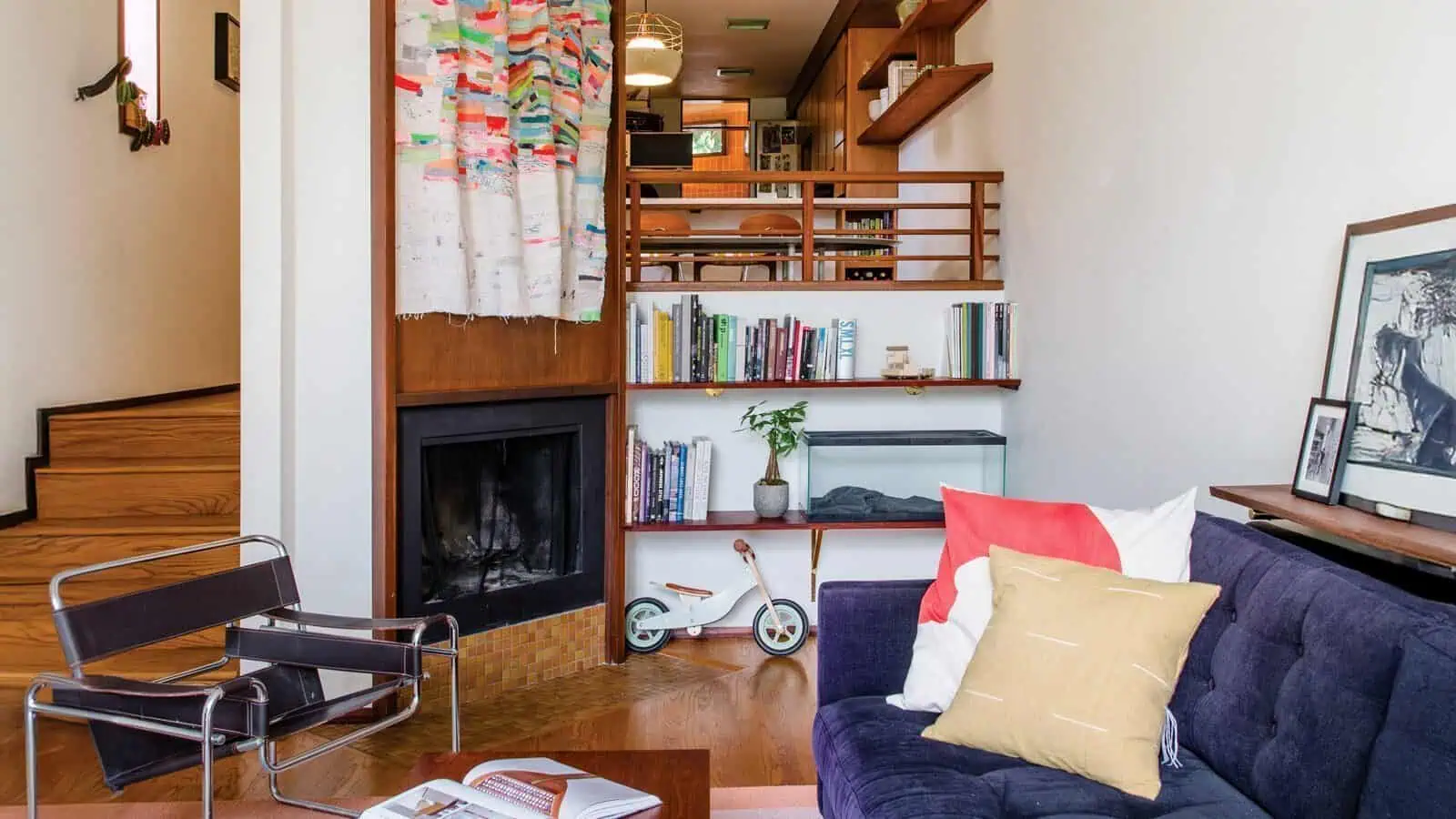
The droll facade hid a dusty gem: a unique 1979 townhome designed by Seattle architect Milton Stricker, who studied under Frank Lloyd Wright. With a roofline as distinctive as Don Draper’s fedora, Stricker homes are easy to spot. There are a half-dozen examples within an easy walk of the Wolf-Ash home in the Mount Baker neighborhood. The 1,000-square-foot split-level townhome, one of four units in the building, was created in the horizontal Prairie style, inspired by the flat, broad expanse of the Midwest and the first uniquely American architectural style of the 20th century.
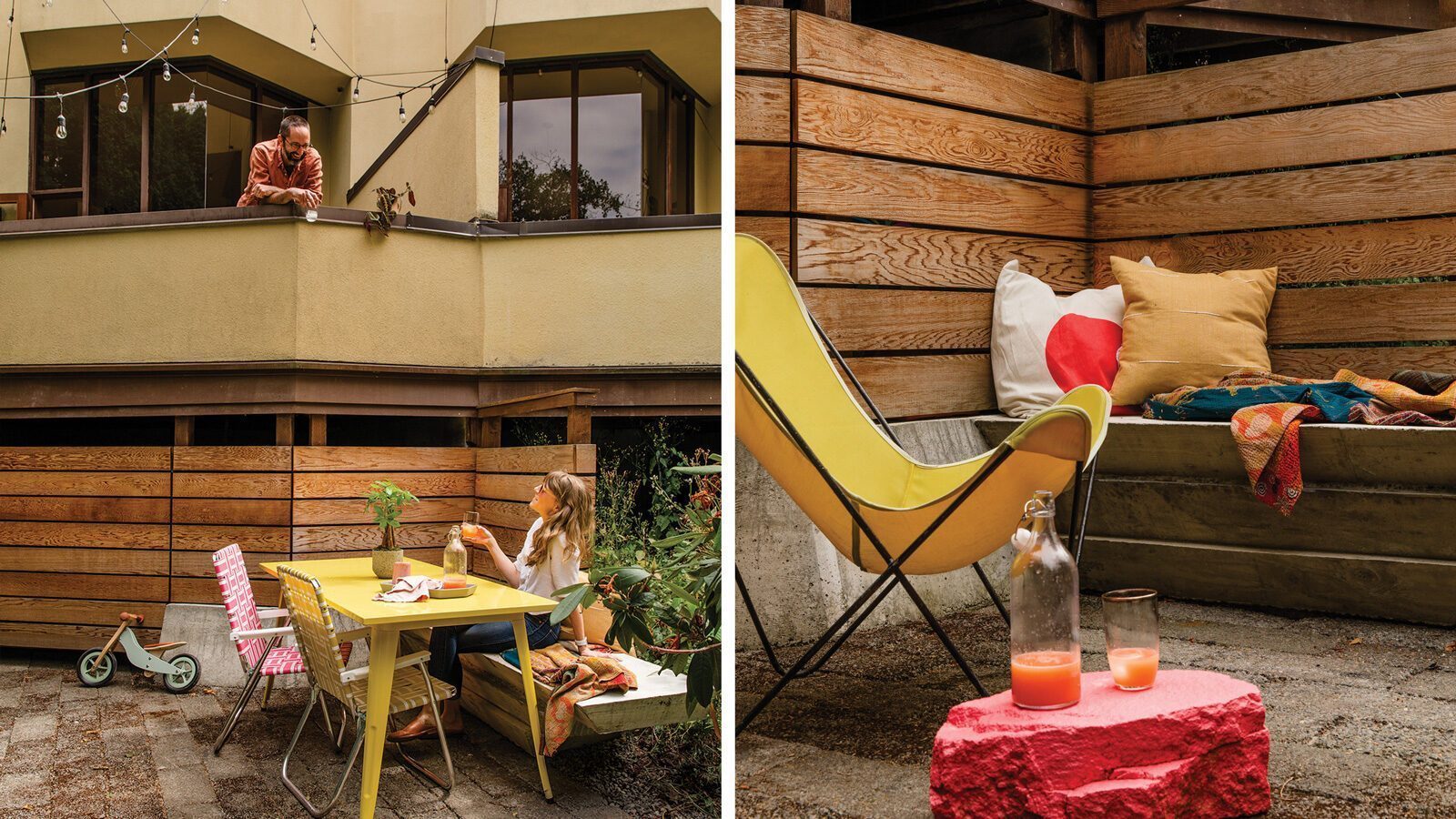
It was the narcotic effect of the home’s custom-built-on-site windows that sealed the deal. They featured butt-joint glazing, a glass-on-class mitering technique that allows a seamless panoramic view. Modern energy codes prevent the method from being used in new construction. The good news was that the home was purchased from Stricker’s son and, unlike the other three units, had retained many of its original mid-century details. The bad news was that the tiny kitchen retained some of the Space Age’s less critical contributions to culinary science, such as lazy Susan technology and clinically obese appliances.
Trapezoids and acute angles were among the stock in trade for Stricker, who demonstrated no terrible affection for precise right angles, at least not in this rendering. The building is an extended hexagon with pointed ends.
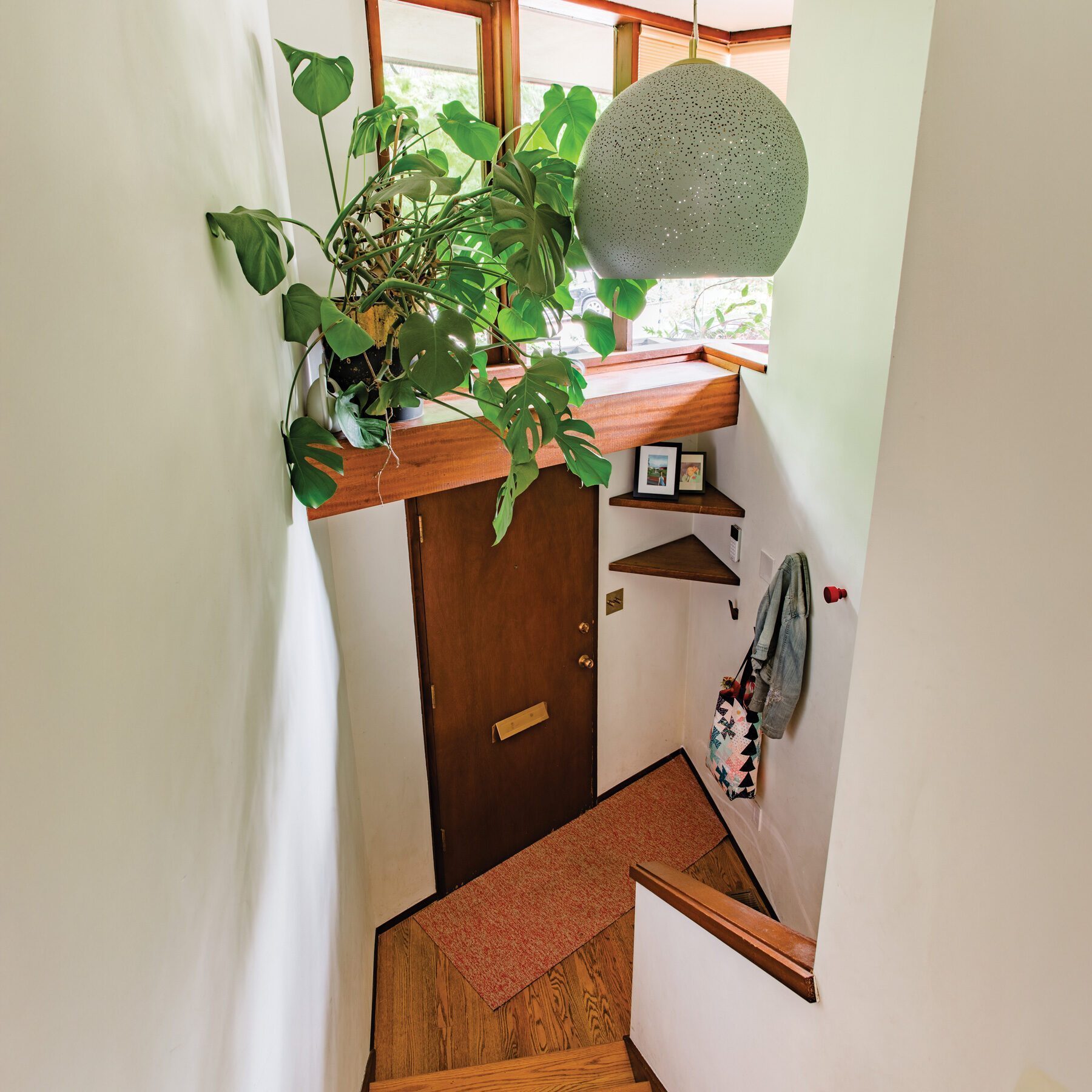
That makes for intriguing architecture, but also creates some maddening remodeling complications. One might reasonably assume that the wall behind the existing refrigerator is square and would therefore accommodate a new installation to a quarter-inch margin tolerance. That was not the case.
“At times, it very much seemed like we were remodeling a boat,” Wolf notes. “By the end of the project, our tile installer was not in love with us.”
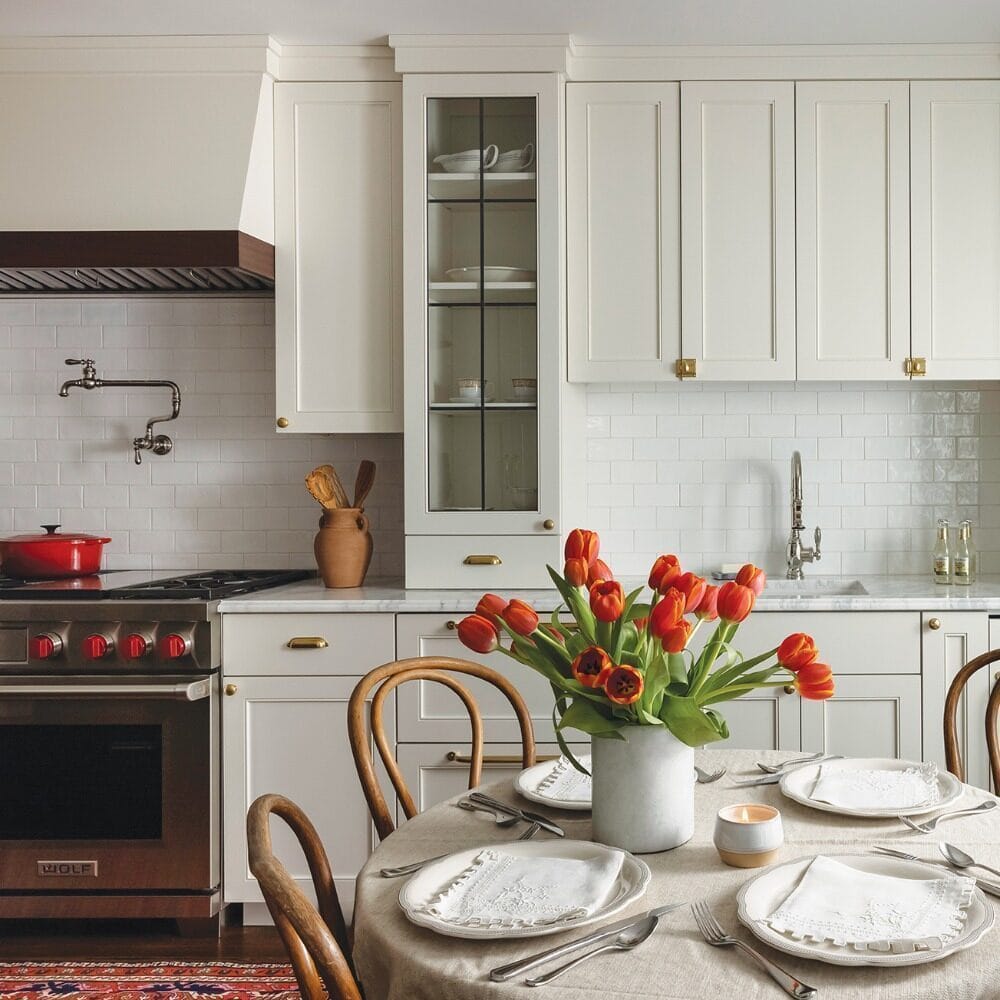
To rage against the extremely controlled palette — cherry cabinets, mahogany trim and white walls — they unleashed “punches of color,” tagging light fixtures mint green and commissioning splashes of faux handmade variegated porcelain tile.
They decided they could free up valuable space with a slender, scratch-and-dent German refrigerator with the freezer on the bottom. In time they would come to prefer the new arrangement. “It’s easier to reach everything, and you don’t have to deal with those weird things lurking in the corners,” says Ash, the family cook. But the real party trick of the remodel is the new hidden induction (Invisacook) stove, which heats through the countertop. There are no seams, breaks or any other indication that a portion of the countertop is actually the stove, making it sleek, safe, space-efficient and a snap to clean.
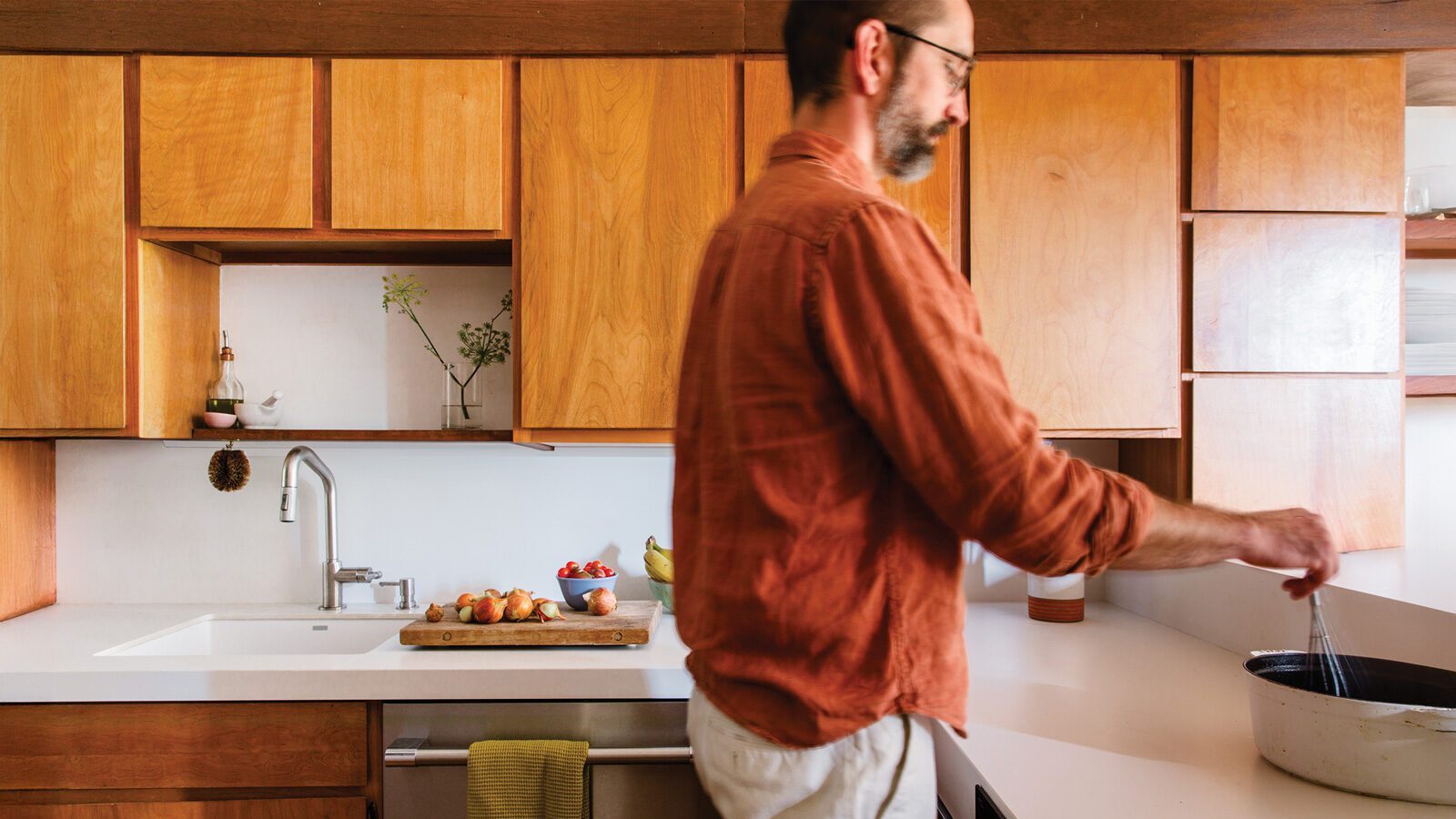
“You can put a piece of paper under a Dutch oven while you’re cooking, and it won’t ignite. After you’re done, the counter is cool to the touch, so you can immediately use it for food prep or other functions,” Ash says.
“Our counter is porcelain, but I don’t think it works well with quartz, which a lot of people are installing these days.”
Like many others at the start of the pandemic, the couple were stunned to suddenly find themselves working from home. Both are graduates of Auburn University’s prestigious Rural Studio, where they learned to pour concrete and other types of manual labor in the punishing Alabama summer heat.
They immediately rolled up their sleeves and went to work on this project, tackling the “mound of dirt” that comprised the backyard, carving out a 500-square-foot outdoor room. A mill connection provided high-grade cedar slats to hide the home’s unsightly crawl space and create new storage. Ash’s first endeavor was a unique and complex ensemble of Wright-inspired outdoor concrete projects, including a stairway, bench and rippling plant wall: “My goal was to build something that nobody in their right mind would pay for.”
To rage against the extremely controlled palette — cherry cabinets, mahogany trim and white walls — they unleashed “punches of color,” tagging light fixtures mint green and commissioning splashes of faux handmade variegated porcelain tile. The couple were compelled by circumstances to create a lair for their “absurdly annoying” pet hedgehog, which is a short, stout, perky-snouted mammal. They are smaller and in theory cuddlier than a porcupine, and although their spines are stronger, they don’t release barbed quills or toxins.
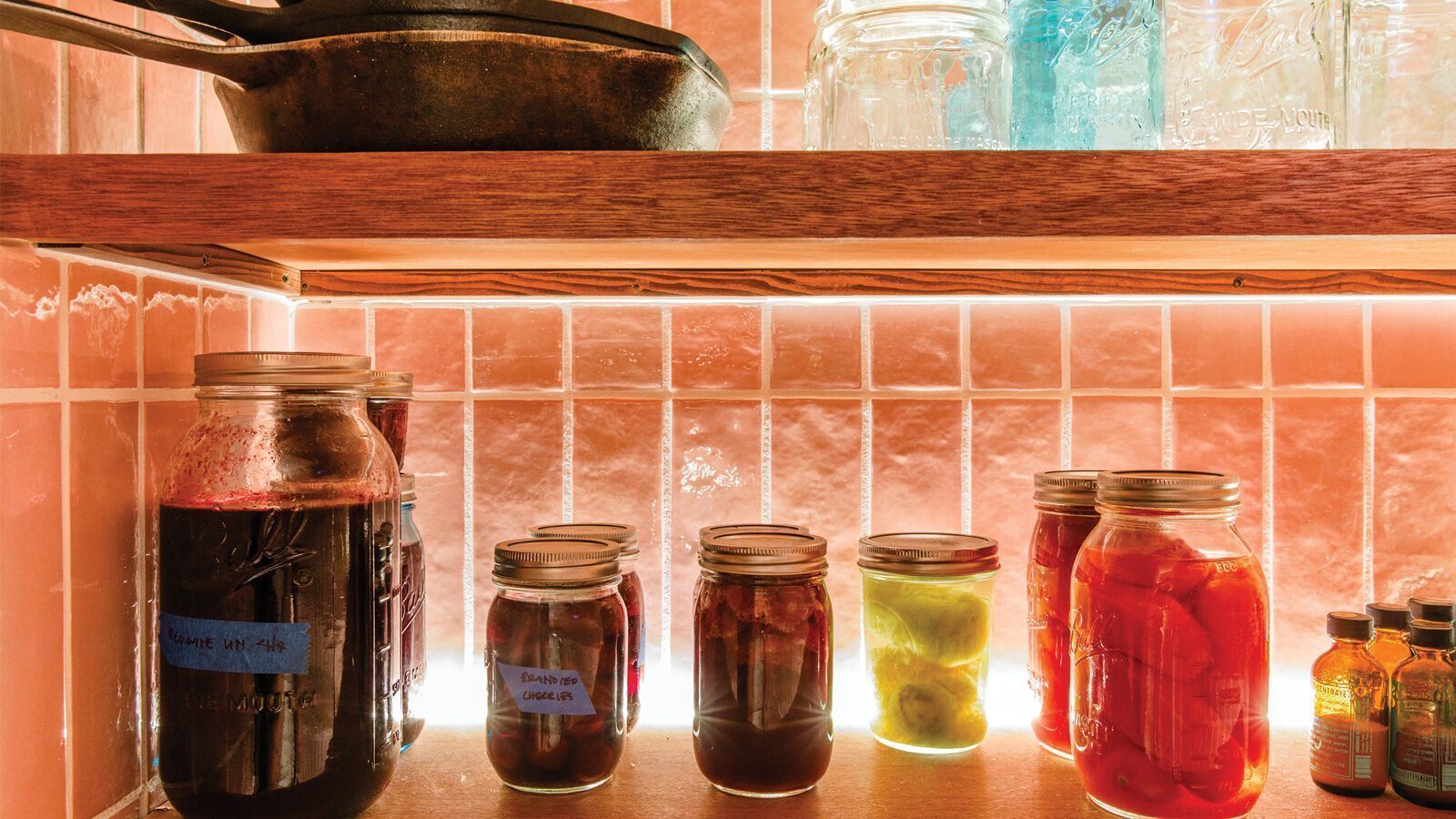
Nocturnal and highly active, hedgehogs are so named for their aggressive foraging style, all of which is justifiable on an evolutionary scale, but of no particular benefit when placed in congress with finely crafted architectural interiors. Their strategy was to build a throne so alluring as to preclude lesser expeditions. An aquarium view was among the non-negotiable demands. Time elapsed: three weeks.
A time crunch compelled them to hire a general contractor, which was easily the top budget-line item. The most savings were realized in the landscaping, since they performed much of that labor themselves. The sheetrock half-wall in the dining nook was replaced with glass, creating a game-changing line of sight from the kitchen to the backyard.
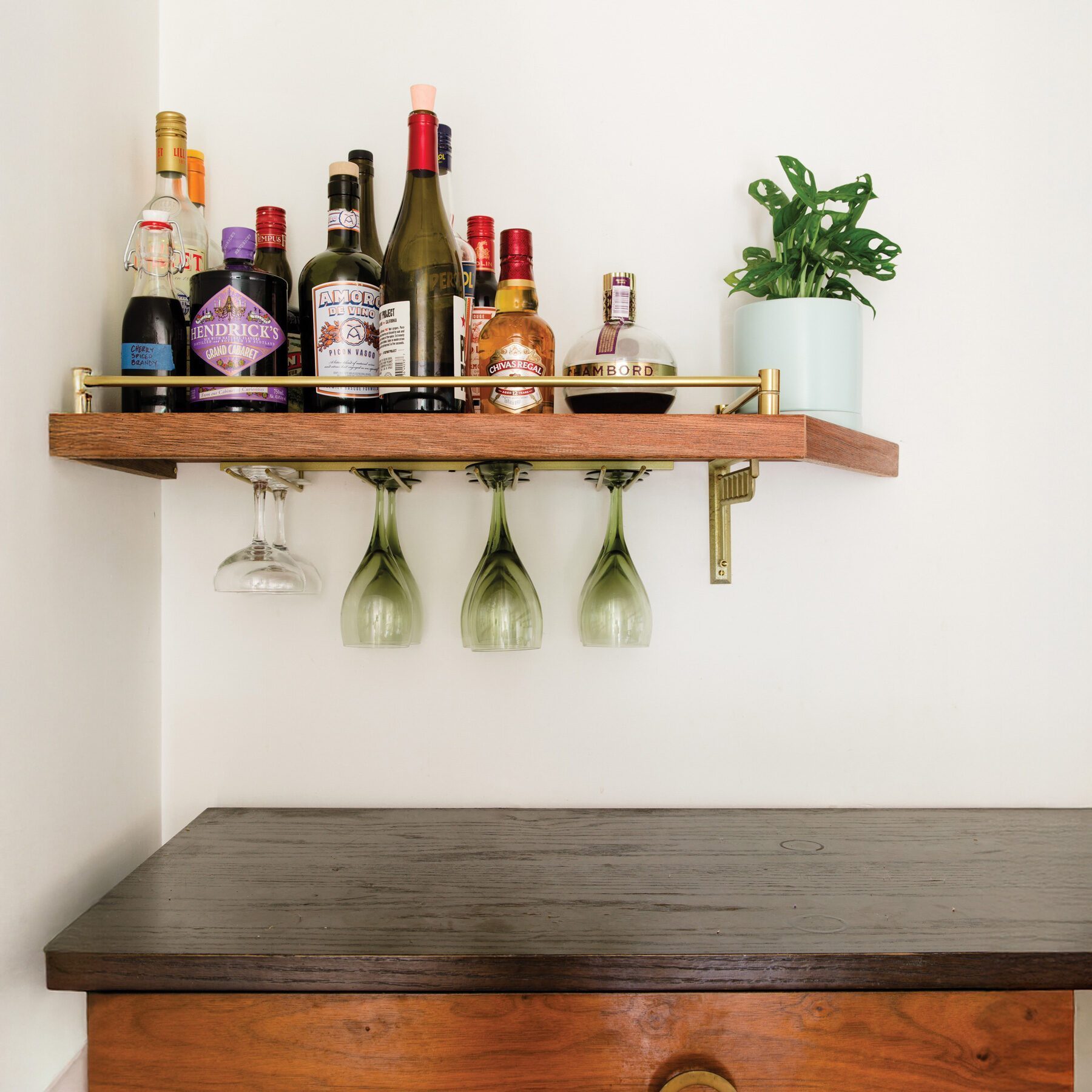
“We respected the vernacular with a subtle remodel,” Wolf says. “It’s not 1979 anymore, but it looks like it has always been there, which is what we are most proud of.”
Follow Us
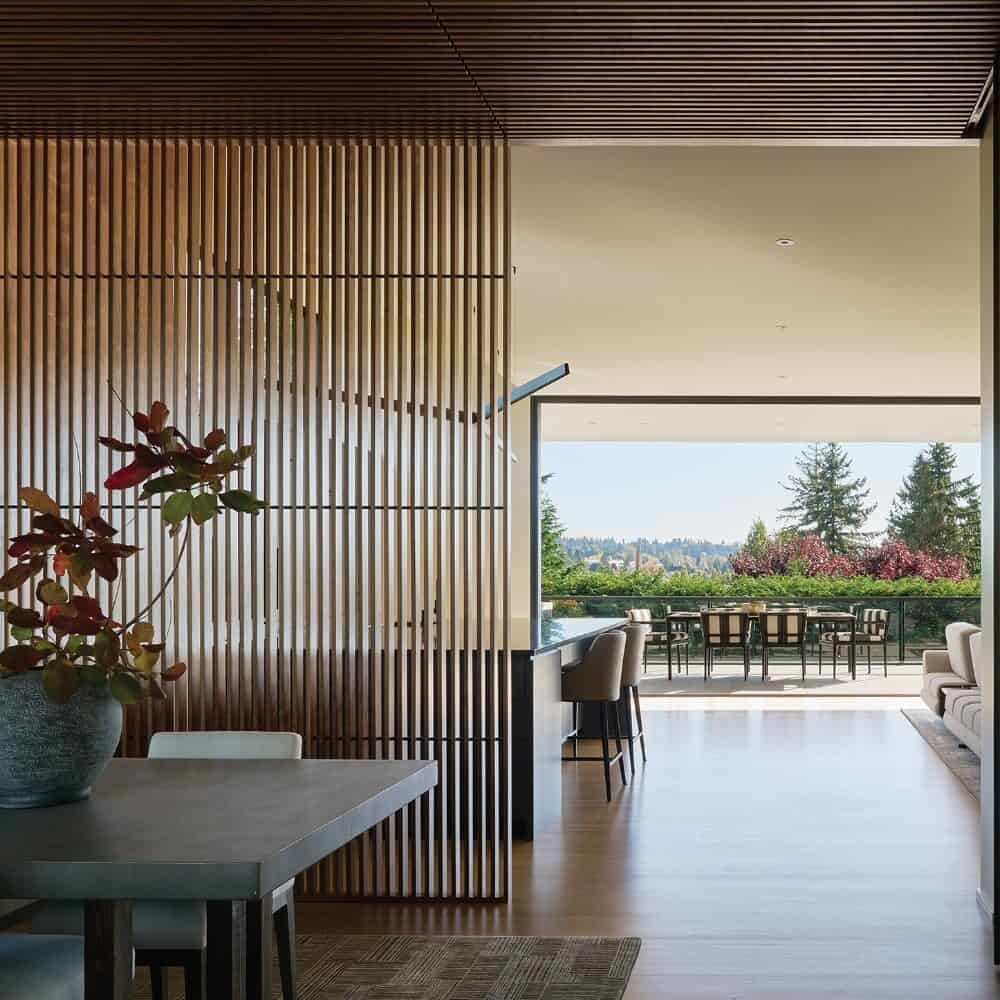
Collaborating Cultures
Looking to build a home to welcome family and friends, one Kirkland couple turns to a sister to design a modern house with influences from the wife’s Thai heritage.
For many years, when homeowners planned to build or remodel, architects and designers advised them to think first and foremost about resale value. From the number of bedrooms to the materials, appliances, and finishes in the kitchens and bathrooms, homes were often treated solely as an investment, with an eye to future sales. In recent…
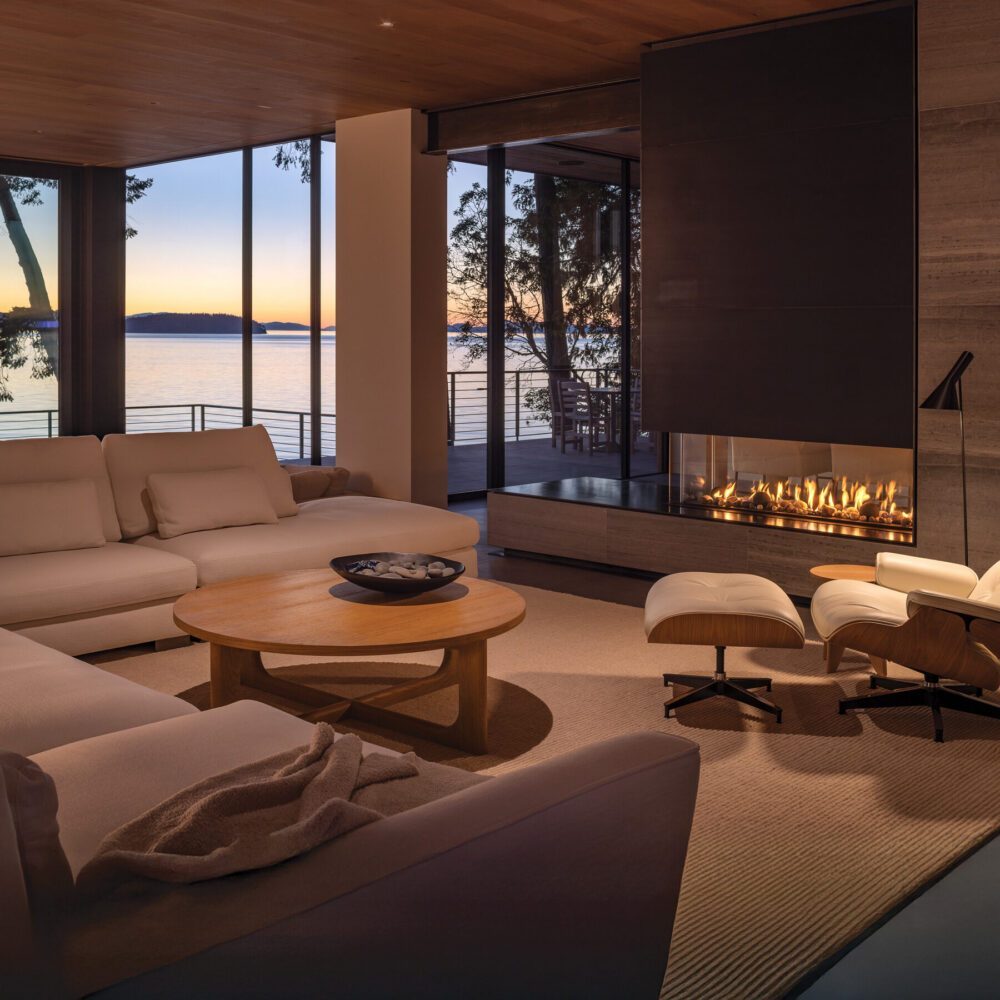
Whale Of A Remodel
The transformation of an Orcas Island home takes advantage of remarkable views
For many years, Apollo 8 astronaut Bill Anders entertained his Orcas Island neighbors with breathtaking acrobatics in his vintage airplane. Anders and his wife, Valerie, had purchased a five-acre compound on the isolated western edge of the island for its mesmerizing view, a subject he knew something about. As a member of the first human…
Underground Overhaul
Going low solves couple's woes
The Seattle underground is alive and well and living in Montlake, a close-knit community in more ways than one. Dense suburban charm is what lures many families to Montlake. Dense suburban charm is also what forces many families to leave Montlake. “The lots here are very small, with setback and height restrictions,” says architectural designer…

Not Flown, Grown: The Slow Flowers Movement is Having A Moment
New book — The Flower Farmers — promotes the use of locally grown, seasonal, and sustainably harvested flowers
A few years ago, Debra Prinzing — speaker, podcast host, outdoor living expert, and founder of Slow Flowers — and her business partner, Robin Avni, pitched an idea to an editor at Abrams Books. The editor passed, but quickly came back with another offer. They didn’t have to think twice about it. Prinzing had extensive…