
Where History Repeats Itself
Populus Seattle features more than 300 original works of art
 By Rachel Gallaher June 17, 2025
This article originally appeared in the May/June 2025 issue of Seattle magazine.
Editor’s note: This story has been updated to reflect the hotel’s new name, Populus Seattle. It appeared in print as Hotel Westland.
Five years after the Covid-19 pandemic sent Pioneer Square on a downward spiral — shuttered businesses, closed restaurants, a dearth of people — things are looking up for the city’s first historic district. With the forthcoming opening of three new Renee Erickson eateries, the first Northwest location for famed craft-cocktail bar Death & Co, and a slew of other restaurant and retail projects set to dot the streets just north of Lumen Field, Pioneer Square seems on the verge of once again topping Seattle’s “best-of” lists.
Kicking off this neighborhood resurgence is the debut of Populus Seattle, a 120-key adaptive reuse project that will feature a rooftop bar and extensive, rotating art program. Part of the RailSpur micro-district, which includes three repurposed historic warehouses and the alleys that intersect them, the hotel pays reverence to the cultural and industrial history of the community, as well as the city at large.
“The backdrop is Seattle’s first neighborhood,” says Rod Lapasin, Populus Seattle’s general manager. “It’s so rich in history as a place of business and commerce. There are a lot of great hotels developing in the city, but this location is iconic.”
Designed by the Miller Hull Partnership, with interiors from Curioso, the project sits on the corner of First Avenue South and South King Street in a structure that dates to 1907. Originally a steam-supply warehouse called the Westland Building, the space held a number of tenants throughout the decades, from traditional offices to a co-working space. While razing the shell and pursuing a new build would have equaled a less complicated approach, the real estate development company behind the project (Denver-based Urban Villages) felt that maintaining the building’s original identity was important. Adaptive reuse also provided a more sustainable approach.
“This is probably one of the most challenging projects I’ve ever worked on,” says architect and Miller Hull principal Mike Jobes. “Taking the existing building and completely changing how it’s being used presented some really interesting unknowns. The first step is peeling away all the old layers to see what’s actually there.”
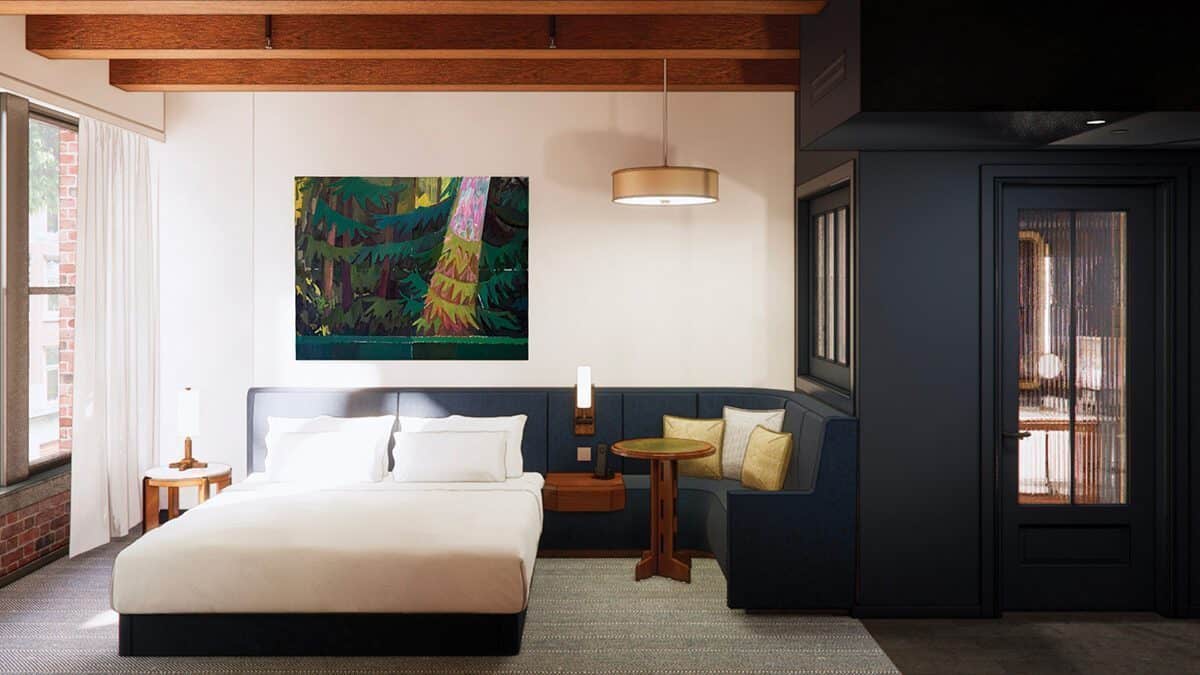
It turns out there was a lot. According to Jobes, under the decades of drywall were giant, two-story original timber columns that would become visual anchors for the project —and a foundation that needed shoring up. The firm worked under the National Park Service’s Historic Preservation Tax Incentives Program (which gives tax credits to private developers who rehabilitate historic buildings), consulting closely with architectural historians at every step of the renovation. In addition to preserving the brick exterior and large timber beams, the design team added another level (for the penthouse suite and rooftop bar), and rethought the interior circulation, relocating the elevator bays and exit stairs to open the lobby and create sightlines from the entrance to the back alley.
“Activating that alley was a fundamental part of the project,” says Miller Hull architect Tets Takemoto, noting that there is a dining platform located in the place where rail cars used to pull up to the building in the early 20th century. “It helps to draw the hotel patrons all the way through the building, rather than having them just come into the lobby and go straight to their room.”
According to Nieri, his goal has always been larger than just hanging paintings on the walls. He sees Populus Seattle like a gallery with a built-in audience. All artworks in the space will be for sale.
In order to accommodate the rooftop bar — the only one in Pioneer Square — Urban Villages worked with land-use attorneys to persuade the Seattle City Council to modify language in the 2022 Citywide Rooftop Feature Code Amendments, which opened up the opportunity for top-floor programming. With sweeping views of the city and landscaping by Site Workshop, the space will celebrate the golden glow of a Seattle summer, its ruby tones meant to suggest a vibrant sunset over the Olympic Mountains.
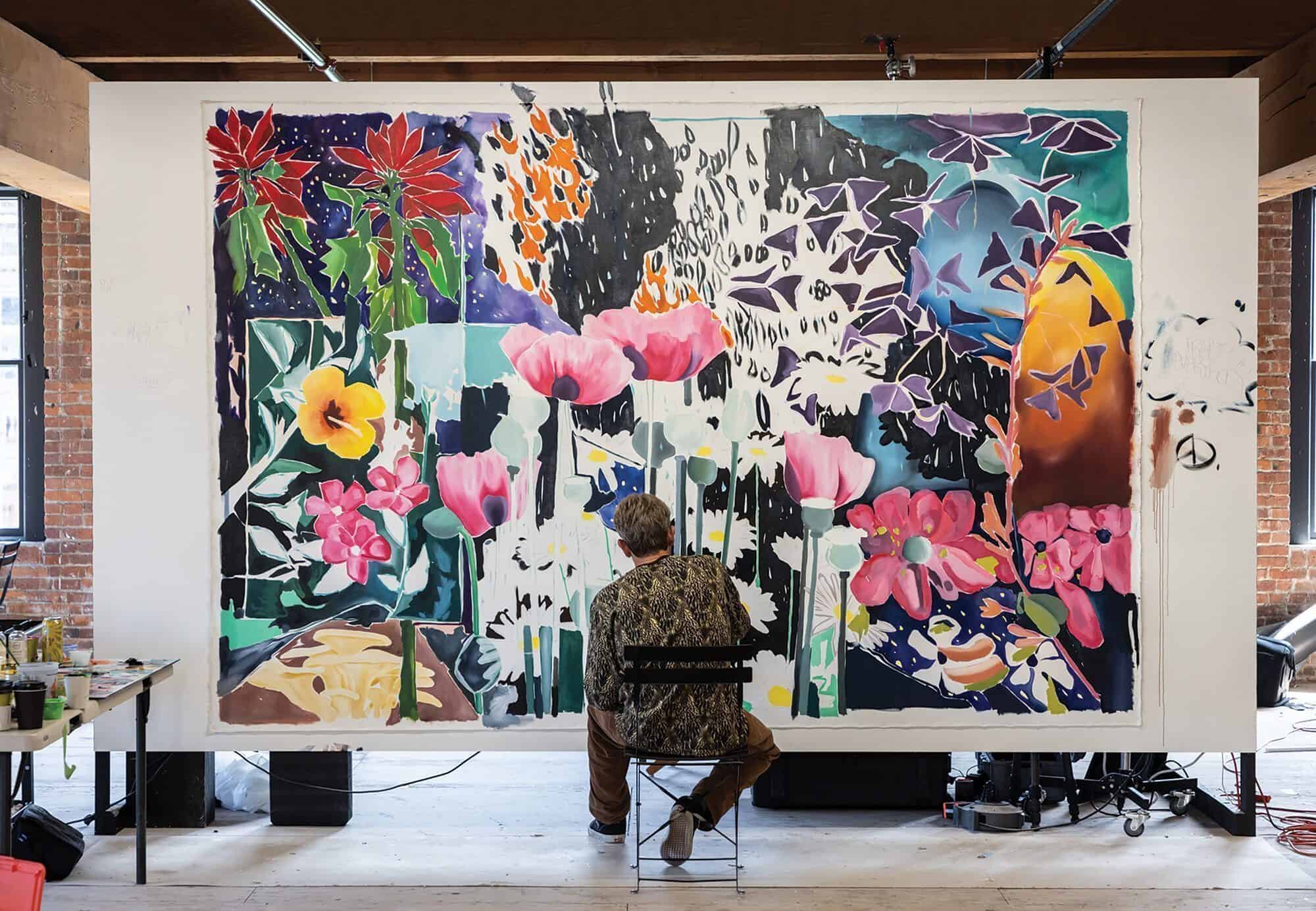
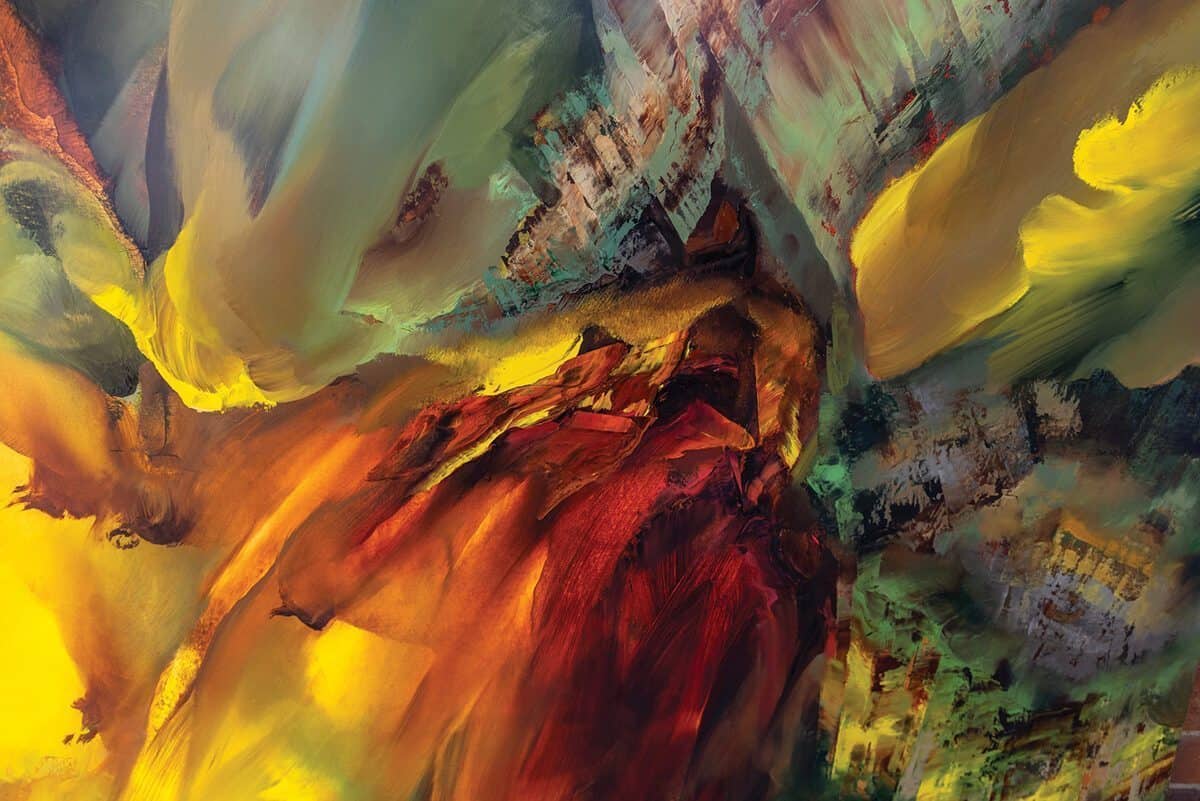
Dominic Nieri, founder of global art production house ARTXIV, heads up Populus Seattle’s art program, which currently includes 328 original commissions from 35 local and international artists in celebration of the Pacific Northwest. According to Nieri, his goal has always been larger than just hanging paintings on the walls. He sees Populus Seattle as a gallery with a built-in audience. All artworks in the space will be for sale — once one sells, another will be created onsite in a 10,000-square-foot studio in the RailSpur Manufacturers Building. “I like this idea of a living, evolving art collection,” Nieri says. “I feel like it’s something that can legitimately support artists.”
Over the summer, Nieri hosted a three-month residency for the inaugural cohort of artists, including local names such as Joe Feddersen, Stevie Shao, and Sean Hamilton. Eventually, hotel guests will have the opportunity to walk over and see the artists in action, reinforcing Seattle as a metropolis that not only values, but was built upon, a legacy of arts and innovation. And of course all eyes are on 2026, when Seattle will be a host city for the FIFA World Cup.
“That’s the moment where we can show what this space — and city — is about,” Nieri says. “And if art and culture is important, which I think everyone agreed it is, then let’s figure out how to put that front and center.” With its renewed civic, culinary, and creative energy, Pioneer Square is already well on its way to doing just that.
Follow Us
Locked In
Two new immersive games bring cinematic puzzles and buzzer battles to Seattle’s growing escape room scene.
On a rainy afternoon in Whistler, B.C. this summer, I finally caved and tried my first escape room. After two straight days of soggy hikes and muddy bike rides, my kids were done with the great outdoors. So we ducked into an escape room called “Buried Cabin,” where a fake avalanche had sealed us inside….

The Pulse: Under the October Moon
Pumpkin stout, Mariners love, and the return of The Blob
That moon this week was something else, wasn’t it? You can feel the season turning, and I love how everyone’s talking about the Mariners. If you’ve been out during a game, it’s the best—the way a bar erupts mid-conversation with cheering and clapping, and then everyone just goes right back to talking. Fall feels good…
The Pulse: Grounds for Change
Sue Bird on stage, Starbucks in retreat.
Fall is officially here, but are we feeling it yet? It’s certainly getting colder. Maybe you’re shutting the windows at night or noticing all the pumpkins at the grocery stores. Some of us are pulling out scarves, others are clinging to late-summer light. I guess the question is, are you Team Fall or Team Endless…

Shaping Our Future Together
Showing up for Seattle matters more than ever.
Seattle’s recovery looks promising, but progress is fragile. Sustaining and strengthening it will take commitment from leaders, businesses, and us: the people that call this region home. The more we show up now—supporting our neighborhoods, businesses, and the people who bring them to life—the more we’ll benefit from the thriving, beautiful city we call home. We…