
The First Sculptor of Seattle
James Wehn's work can still be seen all over the city
By Brad Holden July 5, 2024

This article originally appeared in the May/June 2024 issue of Seattle magazine.
My first encounter with the work of James Wehn occurred in the 1980s during a family trip to the Seattle Center. At some point that day we found ourselves walking around in the nearby Belltown neighborhood when someone in the group pointed to a statue of Chief Seattle. The 400-pound bronze statue sits at Tilikum Place, the triangular plaza in front of The 5 Point Cafe, and shows Seattle with his right arm extended up, as if in greeting. I was still in high school at the time and had just learned about Chief Seattle in my Washington state history class, so the moment served as perhaps the first time that I remember having any kind of awareness or appreciation toward public art.
Several years later, as a young 20-something, I would haphazardly stumble across the famous bronze bust of Chief Seattle that sits in Pioneer Square. It wasn’t until much later that I learned both pieces were created by the same artist — a turn-of-the-century sculptor by the name of James when, who created some of the city’s first pieces of public art. In fact, he is often referred to as being “the first sculptor of Seattle,” as he created numerous plaques, statuary, and medallions that can be seen all across the city. He even designed the very first seal for the city of Seattle.
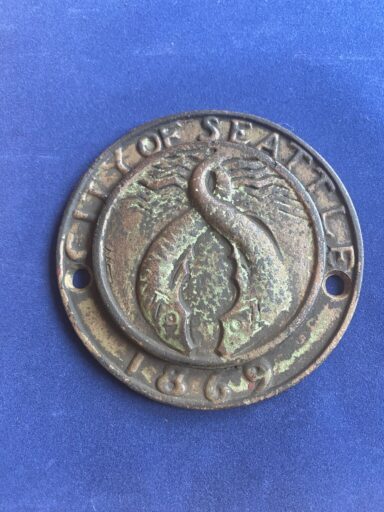
It was a real thrill, then, when I recently acquired one of Wehn’s original medallions that he designed back in 1928 after he was commissioned to create a piece of official insignia for the city’s lamp posts. Wehn cast hundreds of these, which were then used as decorative embellishments on light posts throughout the city. Many of these original medallions were later scrapped in the 1950s and ’60s, during various revitalization efforts, though a few of them managed to escape the scrap heap and will occasionally show up for sale.
I became the proud owner of mine courtesy of a local estate sale. The palm-sized medallion weighs close to a pound, and its beautiful depiction of two intertwined salmon is only enhanced by its century-old patina. When holding one in your hand, you can literally feel its industrial origins, going all the way back to when it was first cast in Wehn’s foundry. Above all, it serves as a physical testament to the artistic endowment that he first established here more than a hundred years ago.
James Wehn first arrived in Seattle as a young boy, when his family moved here in 1889. His father, John Wehn, was an ironworker and was able to find work at a local foundry. A few months after their arrival, the Great Seattle Fire of 1889 wiped out most of the city. Luckily, their house managed to avoid any significant damage and because of the elder Wehn’s profession, he took an active role in the rebuilding of Seattle. This early exposure to the art and skill of blacksmithing, and seeing the architectural beauty that it could create, obviously served as a huge influence for the young boy.
Wehn was 13 years old when he contracted diphtheria and, during a rather lengthy recovery, was given a set of watercolor paints to help him pass the time. He quickly discovered that he had a natural talent for painting and sculpture, which eventually led him to pursuing art as a career. While later attending art school, Wehn also worked with his father at Washington Iron Works, where he learned all the skills involved with foundry work. It is here that his art studies merged with his working knowledge of ironwork, setting him on course to become one of the top metal artists of his time. Wehn moved to Chicago for a couple of years, where he was mentored by a renowned sculptor who taught him how to mold and cast sculptures in bronze. Upon his return to Seattle, in 1905, he opened the city’s first studio that was dedicated to metal as an artistic medium.
For the remainder of his life, Wehn would use this studio to create some of Seattle’s most iconic public art. Much of his work features various historical settlers from the Pacific Northwest, including Henry Yesler, Capt. George Vancouver, and Ezra Meeker. Wehn was especially drawn toward local Native American culture, as seen in many of his most famous pieces. His fascination with local tribes began in his early childhood when he and his brothers would occasionally catch a glimpse of Princess Angeline — the famous daughter of Chief Seattle — walking down the street. In fact, Wehn spent a considerable amount of time visiting local Indian reservations, where he immersed himself in their history and culture, making sketches of the various inhabitants that he would later use as visual references for some of his sculptures.
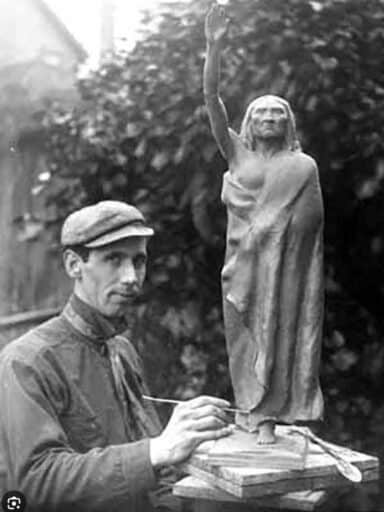
His first major project began in 1908, when the city commissioned him to create the statue of Chief Seattle. He spent a total of fi ve years toiling away on that project in order to make it as perfect as possible. While it was the city’s second piece of public art (the first one being the totem pole that was installed in Pioneer Square in 1899), it was the first publicly commissioned art for the city of Seattle. The 6-foot-tall statue was officially unveiled by Chief Seattle’s great-great granddaughter at a very well-attended opening ceremony on Nov. 13, 1912.
During these early years, Wehn developed a friendship with University of Washington professor and historian Edmond S. Meany. Wehn, himself, would subsequently teach art classes at the university and would also establish the Department of Sculpture there in 1919. Due to this work at the collegiate level, Wehn would later be named an Officer of the French Academy of Arts.
His next significant work took place in 1936 when he was commissioned to design the city of Seattle official seal. Additionally, he would prolifically create more than 300 medallions, medals, statuary, and other sculptures, which were mostly used for civic purposes throughout the local region. This includes such notable works as the first state of Washington commemorative medal, which he designed in 1953. He also served for two years on the city’s first Municipal Art Commission.
He remained active well into his twilight years, helping with a restoration of his Chief Seattle statue in preparation for the 1962 World’s Fair. Toward the very end of his life, he would bequeath his entire studio collection to the Washington State Historical Society before passing away in 1973, at the age of 91.
He left behind an enormous artistic legacy that can be seen in schools, buildings, and cemeteries all throughout the local region, with his work widely celebrated for bridging Seattle’s early civic pride with the region’s Native American heritage. A collection of his work, numbering more than 200 pieces, is on permanent display at the Washington State Historical Society Museum in Tacoma.
Follow Us
Malala Yousafzai Returns to Herself
The youngest Nobel Peace Prize winner reflects on college, identity, and what it means to reclaim her story in her new memoir.
Malala Yousafzai’s life was upended at the age of 15 in Pakistan when she was shot on a school bus by the Taliban for speaking out about girls’ education. She was treated for life-threatening injuries and recovered in the United Kingdom, where her family permanently relocated. Catapulted into the public spotlight at a tender age,…
Carrying the Legacy Forward
Shannon Lee is recognized at the Very Asian Foundation's gala in Bellevue for her work in preserving her father Bruce Lee’s cultural impact.
For film and martial arts icon Bruce Lee, before there was Fist of Fury or Enter the Dragon, there was The Big Boss. The film marked Lee’s 1971 big-screen breakout role. He would tragically die two years later in May of 1973 from a cerebral edema. Now, 52 years later, Lee’s daughter, Shannon Lee, is…
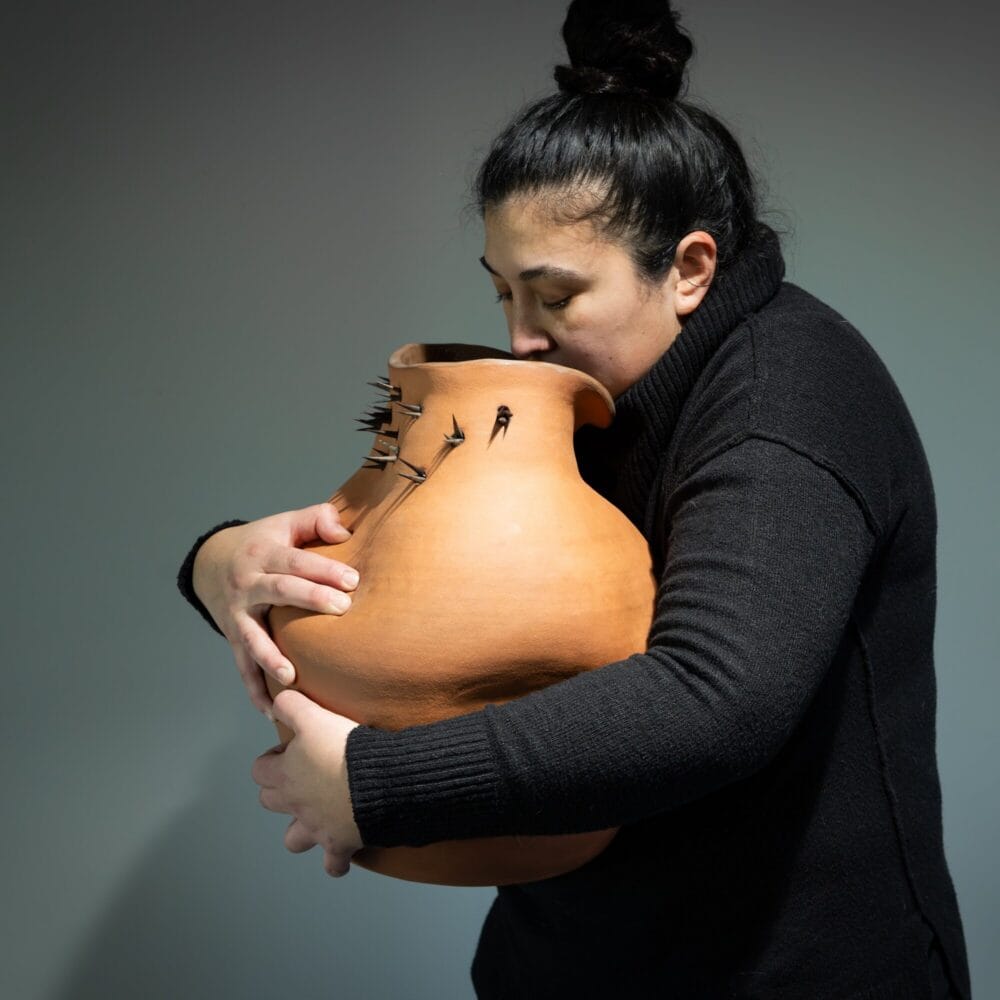
Tracing Lineage
Glass, fiber, and clay become vessels of cultural memory in Priscilla Dobler Dzul’s museum debut at the Frye.
For the past decade, Tacoma artist Priscilla Dobler Dzul has been steadily gaining the attention of the Seattle art world. From a solo show at the now defunct Mad Art in South Lake Union to winning the Neddy Award in 2022, Dobler Dzul’s career has continued to blossom. Water Carries the Stories of our Stars,…
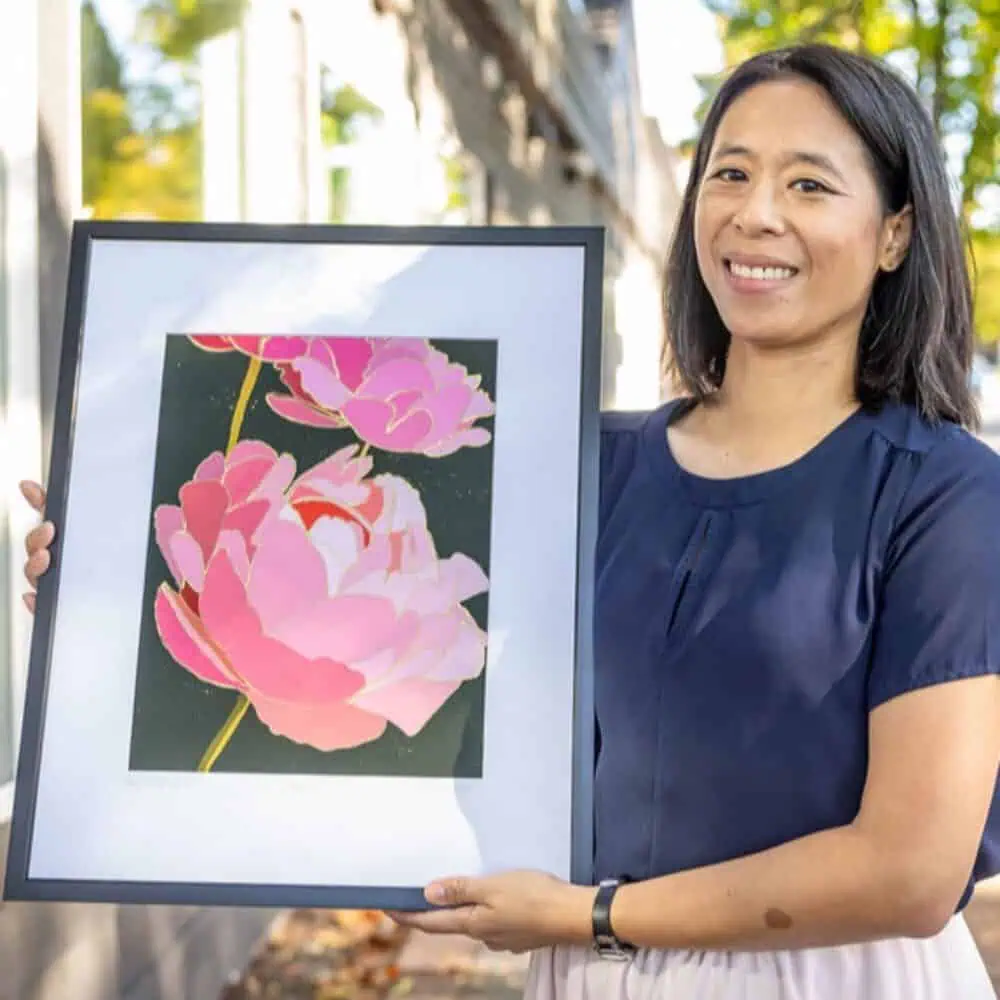
Flowers Light Up Lake City
Artist Kimberly Chan’s digital florals bring a little warmth to Seattle’s gray season.
On a stretch of Lake City Way lined with bus stops and small businesses, one bright window refuses to fade into the background. Inside, artist Kimberly Chan’s digital florals bloom behind the glass—oversized peonies, tulips, and peach blossoms. The five-month installation is part of Seattle Restored, a city initiative that transforms unused storefronts into art…